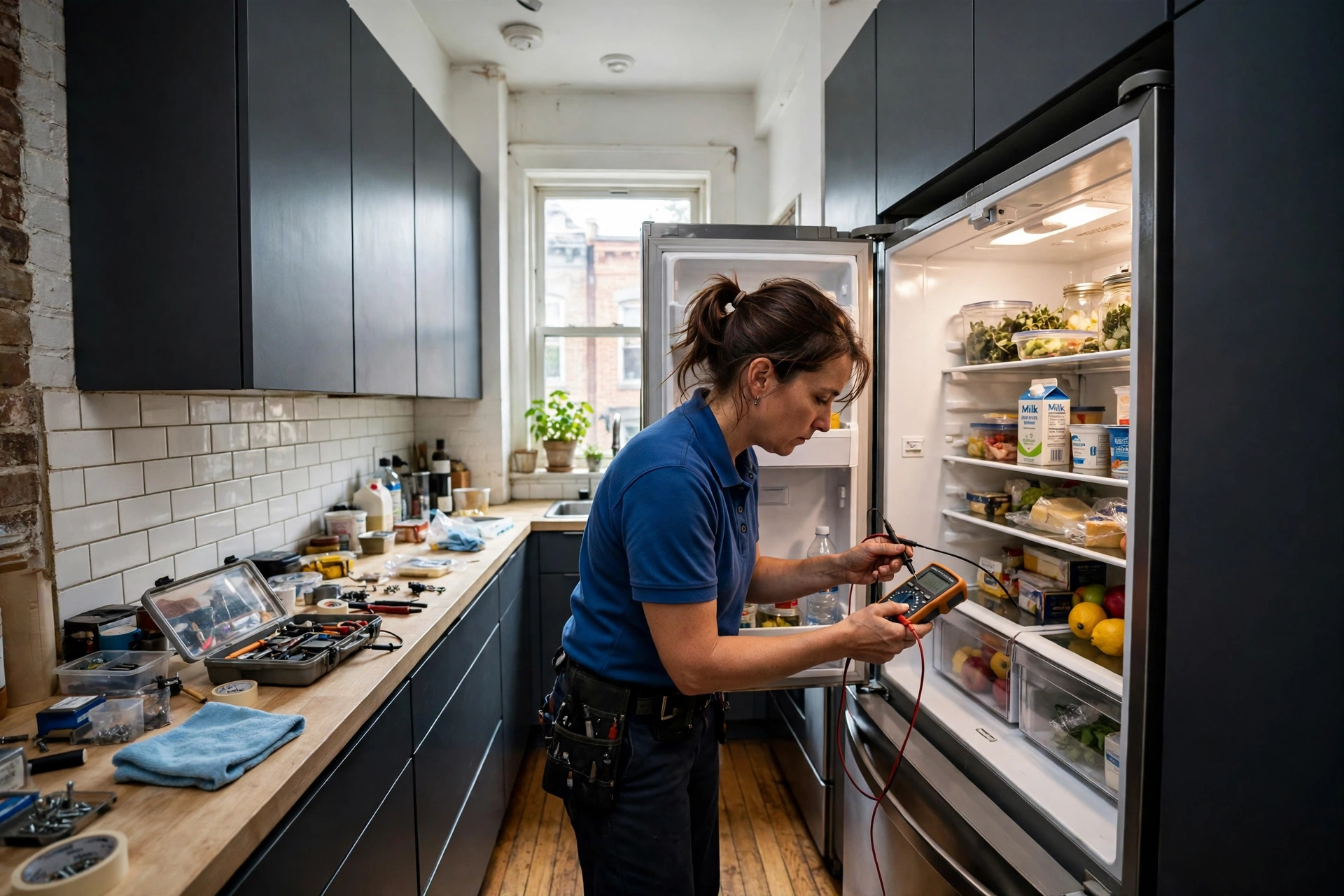
Washington DC Appliance Repair Co is the Washington crew for refrigerator repair: testing comes before pricing, the figure is put in writing, and the repair follows only after you approve it.
Refrigerator Repair in Washington, DC by Washington DC Appliance Repair Co
Washington DC Appliance Repair Co handles refrigerator repair across Washington, DC with a simple discipline: measure first, quote in writing, and let the evidence name the part before anyone orders it.
A failing refrigerator announces itself quietly at first: milk that turns early, a freezer that frosts over, a motor that runs and runs. We repair all the common configurations, French door, side by side, bottom freezer, and the older top freezer units that anchor second kitchens and garage setups. There is a pattern to refrigerator failures in Washington: they are noticed on weekends, before guests, and ahead of holidays with suspicious reliability.
Working Washington teaches the local lessons quickly. Washington's housing runs from Capitol Hill rowhouses and Georgetown townhouses to condo towers in Shaw and Logan Circle and single family streets in Chevy Chase and Brookland, and every housing type keeps its own appliance profile. Storm season power events age control boards, hard water scales everything it touches, and garage and basement second units live harder lives than kitchen appliances ever do.
Refrigerator Repair Problems We Diagnose and Repair in Washington
Cooling complaints come first
When the fresh food side runs warm, airflow is the first suspect: an evaporator fan that quit, a damper door stuck closed, or condenser coils blanketed in dust and pet hair. A cold freezer beside a warm refrigerator is a distribution problem, not a cooling problem, and it is one of the most repairable faults on the platform. Constant running with poor cooling can mean a refrigerant charge problem, though a good diagnostic rules out fans, gaskets, and dirty coils before anyone blames the sealed system. Door gaskets that no longer seal let warm room air pour in around the clock, frosting the evaporator and exhausting the compressor. A repair in the District is proven under load before it is called finished, rowhouses and high rises alike.
Frost, ice, and water where they do not belong
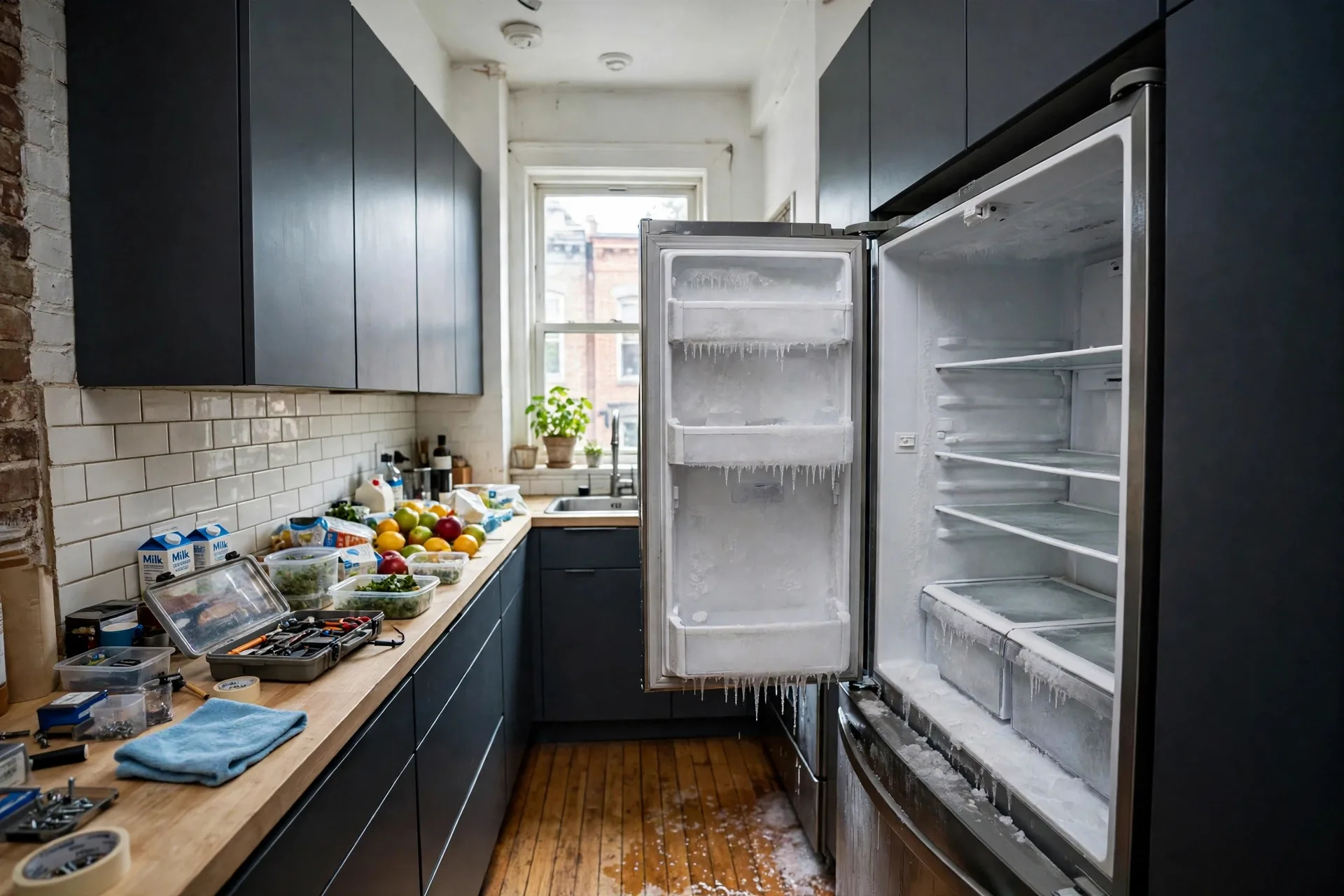
Ice maker trouble is its own family: a fill valve that will not open, a frozen supply tube, or a mold thermostat that never calls for a harvest. Puddles under the produce drawers point to a defrost drain frozen or clogged with debris, so melt water takes the only path left, into the cabinet. A clicking sound followed by silence is often the start relay giving up, one of the least expensive repairs on the whole appliance. Heavy frost on the freezer back wall means the defrost system has failed: heater, timer or board, or the defrost thermostat, and the evaporator is choking on its own ice. Anacostia and Congress Heights households get the identical diagnostic standard as any address in the city; the map changes nothing.
Noises, leaks, and electrical faults
Rattles and buzzes localize well: a fan blade touching ice, a compressor mounting grommet worn flat, or a water line vibrating against the cabinet. Control boards fail with heat and age; the test is whether the board sends voltage to the component that is not running, not guesswork. A leak at the back of the unit usually involves the water supply line or its connection at the valve, and it deserves prompt attention because it runs silently. The District's housing runs from Capitol Hill rowhouses to Cleveland Park colonials, and every diagnosis starts with the building in front of us.
How We Diagnose Refrigerator Repair in Washington
We begin with the numbers: fresh food and freezer temperatures, frost pattern on the coil, and compressor draw. Those three readings sort most cooling faults into the right family before a single part comes off. Petworth, Shaw, and Columbia Heights rentals route turnover work through written findings as standard practice.
Recent Project: Refrigerator Repair in Georgetown
BEFOREAFTER
A call from Georgetown: Bottom freezer unit clicking and refusing to start. Testing found the compressor start relay had burned contacts. We fitted a new start device, confirmed compressor draw, and left the unit cooling on test. District water hardness writes scale into elements and inlet valves on a schedule we know by heart.
Turnaround
Finished in one visit.
Final Price
$230
Refrigerator Repair Cost in Washington, DC
Published guides put refrigeration repair at about $255 on average, inside a typical band of $185 to $420 for the work on this page; fan motors and relays sit at the low end, sealed system work at the top. The quote you approve is the figure you pay for the diagnosed repair, written before work begins, with the diagnostic visit credited toward it when you go ahead. Georgetown and Dupont Circle kitchens are repaired in place by owners who value the machines they have.
Why Washington Calls Washington DC Appliance Repair Co for Refrigerator Repair
Refrigerators reward diagnosis because the same symptom, warm milk, can be a $40 relay or a compressor. We test in the order that protects your money: airflow, then defrost, then controls, then the sealed system. Every job on this page ends with the appliance run through its work in front of us. A repair that has not performed is a theory, and we do not leave theories running in your kitchen. The visit record stays with the household, readings and part numbers included, wherever in DC the home sits.
Request an Appliance Repair Quote in Washington, DC
Use the quote form to describe the symptom as you experience it. The plainer the description, the faster the diagnosis starts when we arrive.
Frequently Asked Questions
Why is my freezer cold but the refrigerator warm?
Airflow is the usual answer. The freezer makes the cold and the refrigerator borrows it through vents and a fan; when the fan quits or frost blocks the path, the fresh food side warms up while the freezer stays cold. Summer storm flickers age control boards across whole wards at once here.
How long can a refrigerator repair take?
Most common faults, fans, relays, gaskets, defrost parts, are finished in a single visit of about an hour once the part is in hand. Sealed system work takes longer because the refrigerant circuit has to be opened, evacuated, and recharged. Condo and co-op rules in buildings from Foggy Bottom to Chevy Chase shape visit planning, and the form is where that planning starts.
Is it worth repairing a refrigerator that is 12 years old?
Often, yes. If the cabinet, doors, and sealed system are sound, a fan, board, or gasket repair buys years at a fraction of replacement cost. We will tell you plainly when the math stops working, because a compressor failure on a worn cabinet is that line for many owners. Basement and in-law units across the District get kitchen grade diagnosis, not a lesser verdict.
Why does my refrigerator run all the time?
A refrigerator that never rests is compensating for something: heat it cannot shed through dirty coils, cold leaking past a gasket, or a defrost problem icing the coil. We find which one before quoting anything. The District's housing runs from Capitol Hill rowhouses to Cleveland Park colonials, and every diagnosis starts with the building in front of us.
What does the diagnostic visit cost?
The visit runs $75 to $125 in the published guides, credited toward the repair in the usual arrangement. What it buys is certainty: the actual fault, and a single written price for putting it right. District water hardness writes scale into elements and inlet valves on a schedule we know by heart.
Can you repair my refrigerator's ice maker?
Yes. Ice makers are repaired as their own system: inlet valve, fill tube, mold thermostat, and the harvest mechanism. Many ice maker faults are a frozen fill line or a valve that has stopped opening, both standard repairs. Basement and in-law units across the District get kitchen grade diagnosis, not a lesser verdict.
Get Your Appliance Repair Quote
One form covers repairs and installations alike. Name the appliance, tell us what is happening with it, and we will reply with the price band for the job and the next step: a diagnostic visit, a written figure, and work that starts only on your approval.
Prefer to talk it through first? Send the form and we will call you back at the number you give us.