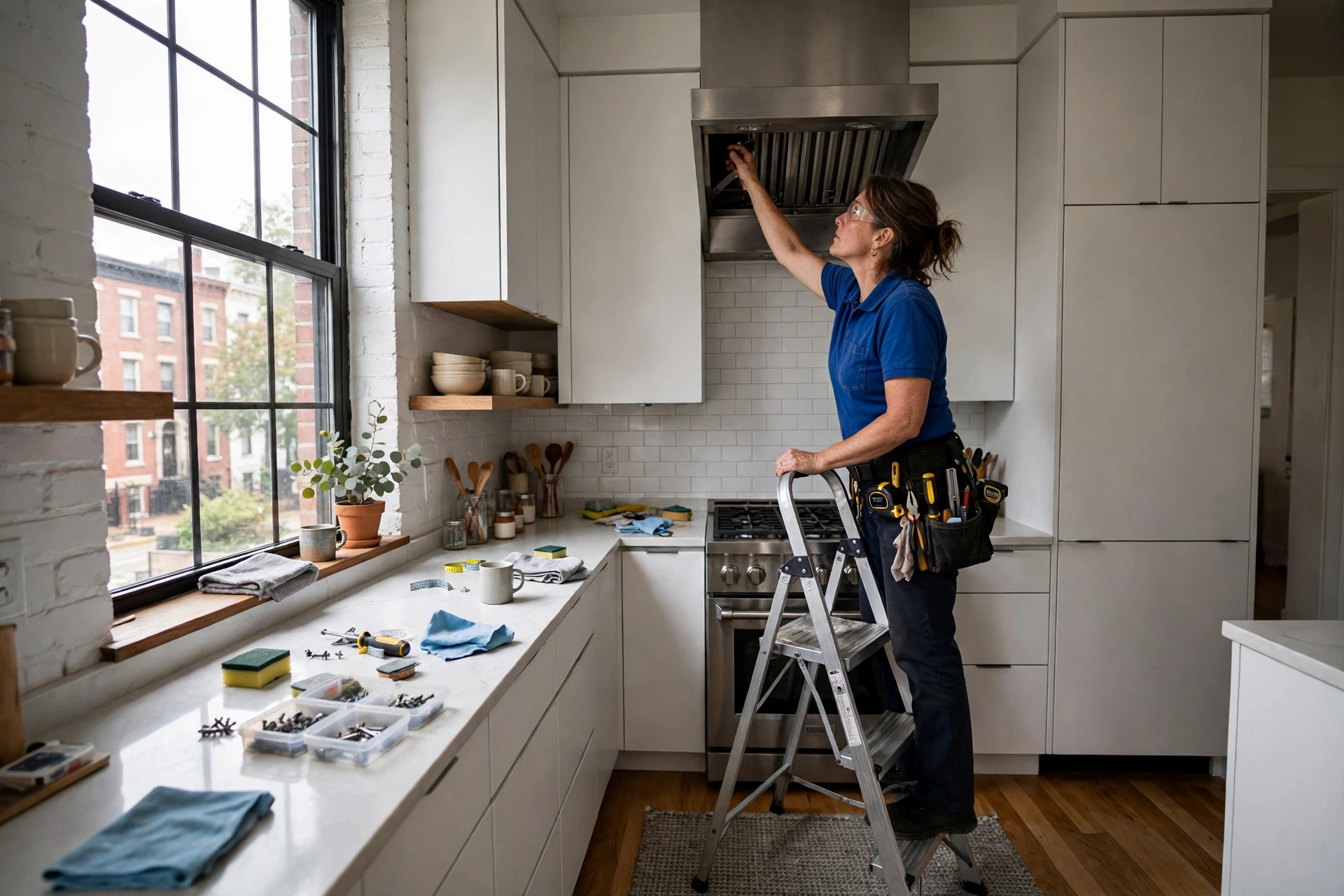
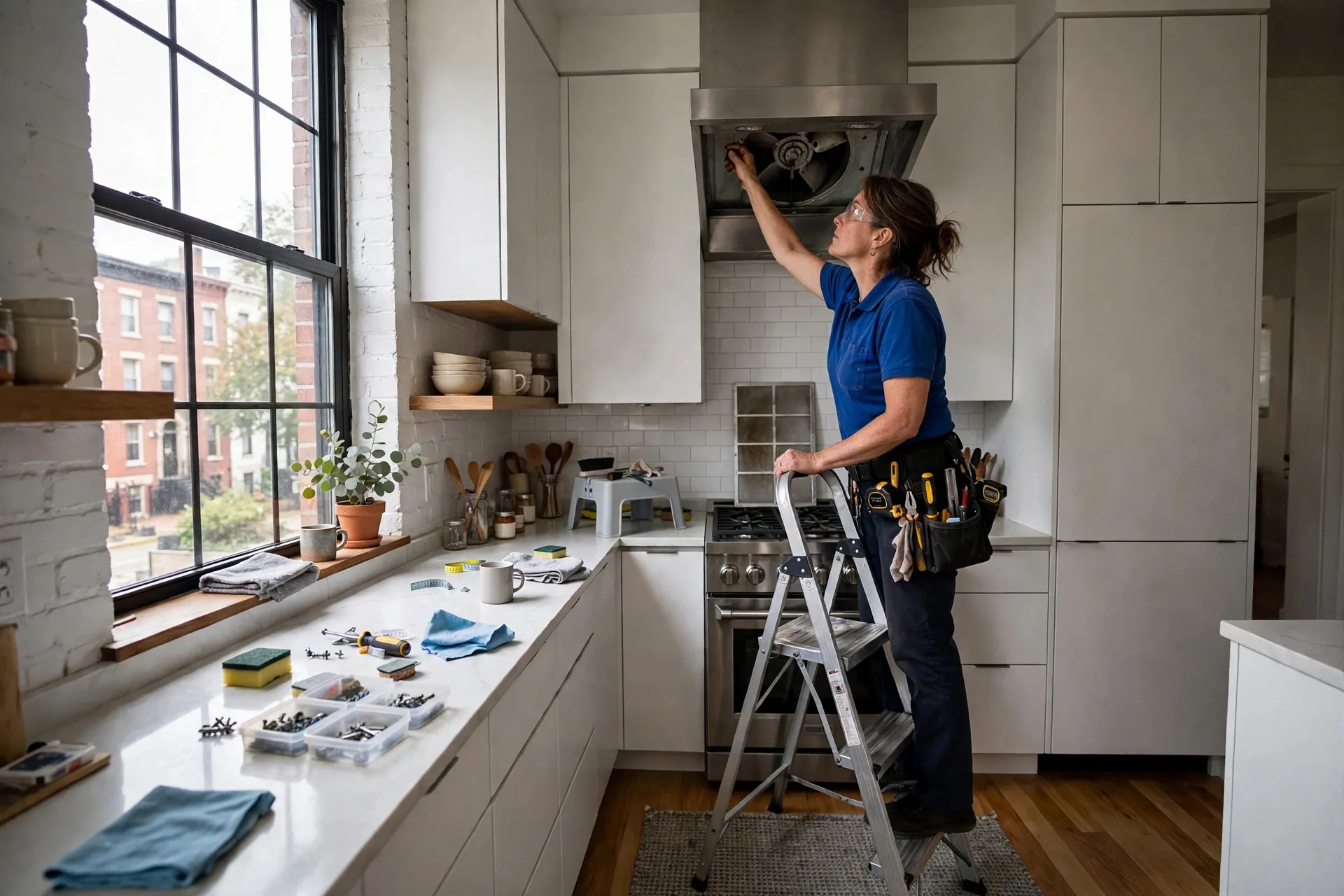
Washington DC Appliance Repair Co sends its own technicians across Washington for range hood repair: readings first, a written quote second, and the repair third, in that order every time.
Range Hood Repair in Washington, DC by Washington DC Appliance Repair Co
Washington DC Appliance Repair Co sends its own technicians for range hood repair in Washington, and no repair is priced until the machine itself has shown us what failed.
Ventilation is the kitchen system nobody thinks about until the smoke alarm does. We service wall, island, under cabinet, and downdraft hoods, and we diagnose capture as a system: fan, duct, damper, and makeup air. The range hood does not care that Washington has dinner plans. When it fails, it fails on its own schedule, and the repair has to be built on evidence.
Fans and airflow faults
Speed controls fail in bands: a hood with only high speed has lost the lower windings or the control that feeds them. Downdraft units add a lift mechanism to the fault list: a unit that will not rise is a gear or switch problem, separate from its blower. A fan that hums without moving air has usually lost its motor or its wheel is slipping on the shaft; a fan that roars and captures nothing is moving air against a blocked path. Condo and co-op rules in buildings from Foggy Bottom to Chevy Chase shape visit planning, and the form is where that planning starts.
Controls, lights, and ducts
We report duct findings plainly, including when the hood is fine and the duct is the whole story, because replacing a hood for a duct fault is a classic waste. Hood lights fail at lamps, sockets, and transformers; all three are quick tests and honest small repairs. Grease is the hood control's natural predator. Cleaning solves a surprising share of panel complaints, and the rest is board work quoted from tests. Basement and in-law units across the District get kitchen grade diagnosis, not a lesser verdict.
How We Diagnose Range Hood Repair in Washington
We test ventilation the way cooks experience it, with steam rising off a kettle and a hand at the exterior cap, plus electrical tests for the fan and controls. Georgetown and Dupont Circle kitchens are repaired in place by owners who value the machines they have.
Recent Project: Range Hood Repair in Adams Morgan
BEFOREAFTER
A call from Adams Morgan: Chimney hood lights out and fan weak. Testing found a failed lamp transformer and a grease loaded wheel. We replaced the transformer, cleaned the wheel and housing, and confirmed capture with steam. Petworth, Shaw, and Columbia Heights rentals route turnover work through written findings as standard practice.
Turnaround
Finished in one visit.
Final Price
$210
Range Hood Repair Cost in Washington, DC
What moves the figure is access and configuration: island and chimney hoods carry ladder time, and duct corrections are quoted separately when the duct is the fault. There are no parts ordered on a hunch: the figure follows the diagnosis, in writing, and it holds for the work described. The visit record stays with the household, readings and part numbers included, wherever in DC the home sits.
Why Washington Calls Washington DC Appliance Repair Co for Range Hood Repair
Our rule is steam before parts: watch what the system does with real vapor, then test the components the evidence indicts. The details of this range hood visit, findings, parts fitted, and readings taken, are written into a visit record you keep. If the machine ever argues with our repair, that record is where the conversation starts. Summer storm flickers age control boards across whole wards at once here.
Request an Appliance Repair Quote in Washington, DC
Use the quote form to describe the symptom as you experience it. The plainer the description, the faster the diagnosis starts when we arrive.
Frequently Asked Questions
Why does my hood run but not clear smoke?
Noise is not airflow. We find where the air stops: damper, duct, or the fan itself, and the fix follows the finding. Anacostia and Congress Heights households get the identical diagnostic standard as any address in the city; the map changes nothing.
Can a hood motor be replaced?
Motors are routine work. The visit also addresses the grease load in the housing, because a new motor in a dirty hood is a job half done. Anacostia and Congress Heights households get the identical diagnostic standard as any address in the city; the map changes nothing.
Why did my hood lose its lower speeds?
The speed control or the motor's lower windings have failed, and testing at the switch distinguishes them. Either way it is a defined repair, not a new hood. Condo and co-op rules in buildings from Foggy Bottom to Chevy Chase shape visit planning, and the form is where that planning starts.
What does the diagnostic visit cost?
The visit runs $75 to $125 in the published guides, credited toward the repair in the usual arrangement, steam test included. A repair in the District is proven under load before it is called finished, rowhouses and high rises alike.
Is a downdraft that will not rise repairable?
Downdraft lifts are mechanical and repairable. The blower is tested on its own merits in the same visit. Summer storm flickers age control boards across whole wards at once here.
Do you clean hoods as part of repair?
Filters and accessible housings are cleaned as part of any fan work, because grease load is both a performance and a safety issue. Deep duct cleaning beyond our reach is referred honestly rather than faked. The visit record stays with the household, readings and part numbers included, wherever in DC the home sits.
Get Your Appliance Repair Quote
One form covers repairs and installations alike. Name the appliance, tell us what is happening with it, and we will reply with the price band for the job and the next step: a diagnostic visit, a written figure, and work that starts only on your approval.
Prefer to talk it through first? Send the form and we will call you back at the number you give us.