#1 Appliance Repair in Washington, DC
Appliance repair and installation for Washington homes: refrigerators, washers, dryers, ovens, dishwashers, and built in appliances, with published price ranges up front and a written figure before any work begins.
Your recent projects →

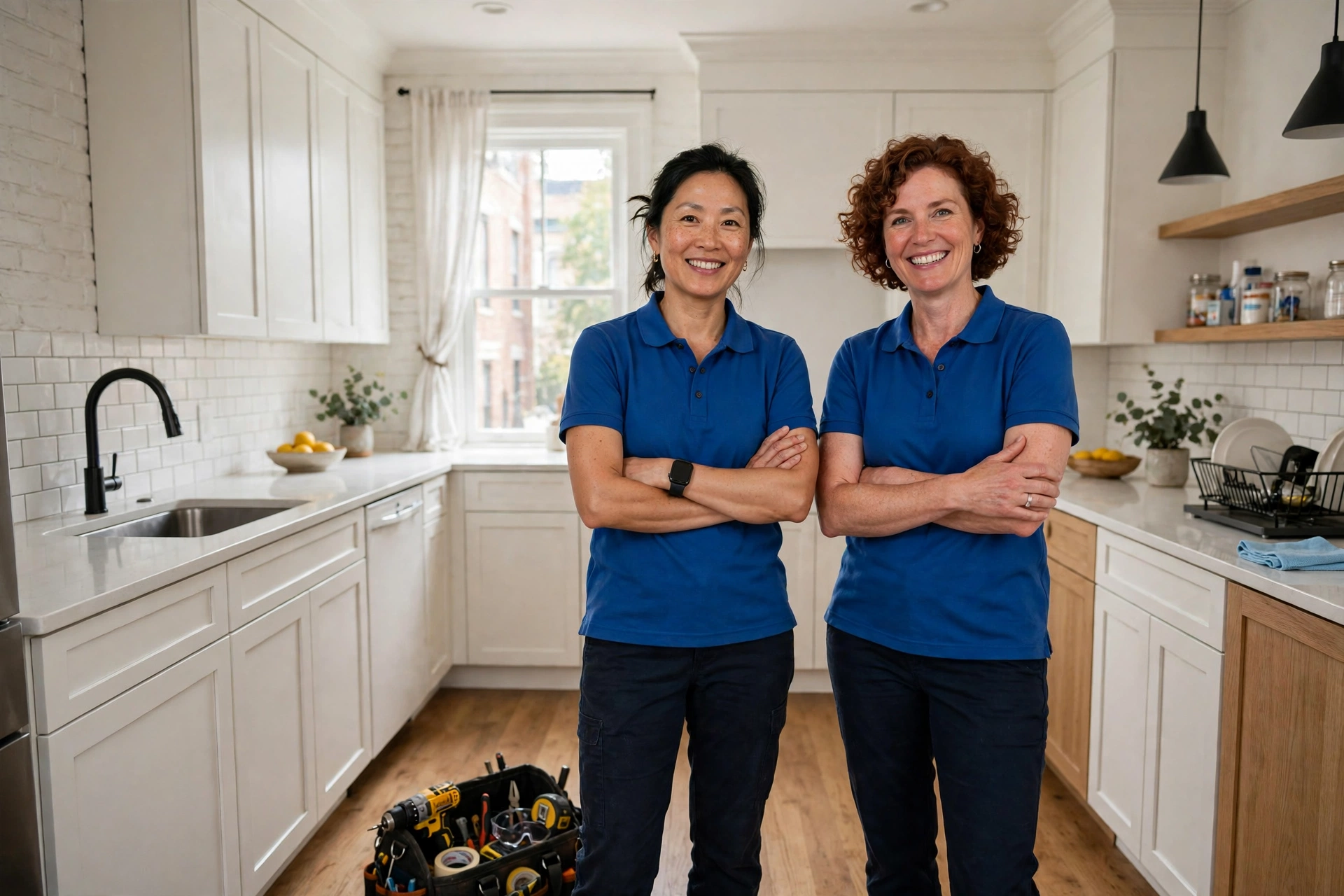
Terrence Brooks, Owner and Lead Technician
I'm Terrence Brooks, and I read every quote request that comes into Washington DC Appliance Repair Co myself. I don't hand a vague description off and hope for the best. I look at the appliance, the symptoms you described, and the home it's in, then I start with diagnosis before any quote. I find the actual fault first, explain what I found in plain language, and only then talk about what the repair will involve.
The price bands you'll see on this site come from published national guides, and I label them that way on purpose. When I do the diagnostic visit, I turn that band into one written figure for your specific job. If you approve that figure, that is the final figure.
I also tell owners plainly when replacement beats repair, even when that means I walk away from a job. Working across DC has taught me its housing. Capitol Hill rowhouses and Georgetown townhouses often have tight access and older built-ins, condo towers in Shaw and Logan Circle run compact stacked laundry, and single family streets in Chevy Chase and Brookland tend toward full-size suites. I plan for those differences before I arrive.


At Washington DC Appliance Repair Co, we repair refrigerators, ovens, ranges, washers, dryers, and dishwashers for homeowners in Washington, DC. The calls repeat because the machines do: a fridge warming up overnight, a washer stopped mid cycle. This page describes how the work is done.
The pattern across Washington is written by its housing. Washington's housing runs from Capitol Hill rowhouses and Georgetown townhouses to condo towers in Shaw and Logan Circle and single family streets in Chevy Chase and Brookland, and every housing type keeps its own appliance profile. Machines installed together fail together, street by street, season by season.
What this company sells first is certainty: a fault proven by testing, a figure in writing, and a repair verified under load, whether the ticket is a refrigerator or a range hood.
The menu below is the whole trade as households actually use it: the cooling, cooking, and laundry machines, the specialty units around them, and installation done to the same standard as repair. DC households plan around real figures, and this page exists so they can.
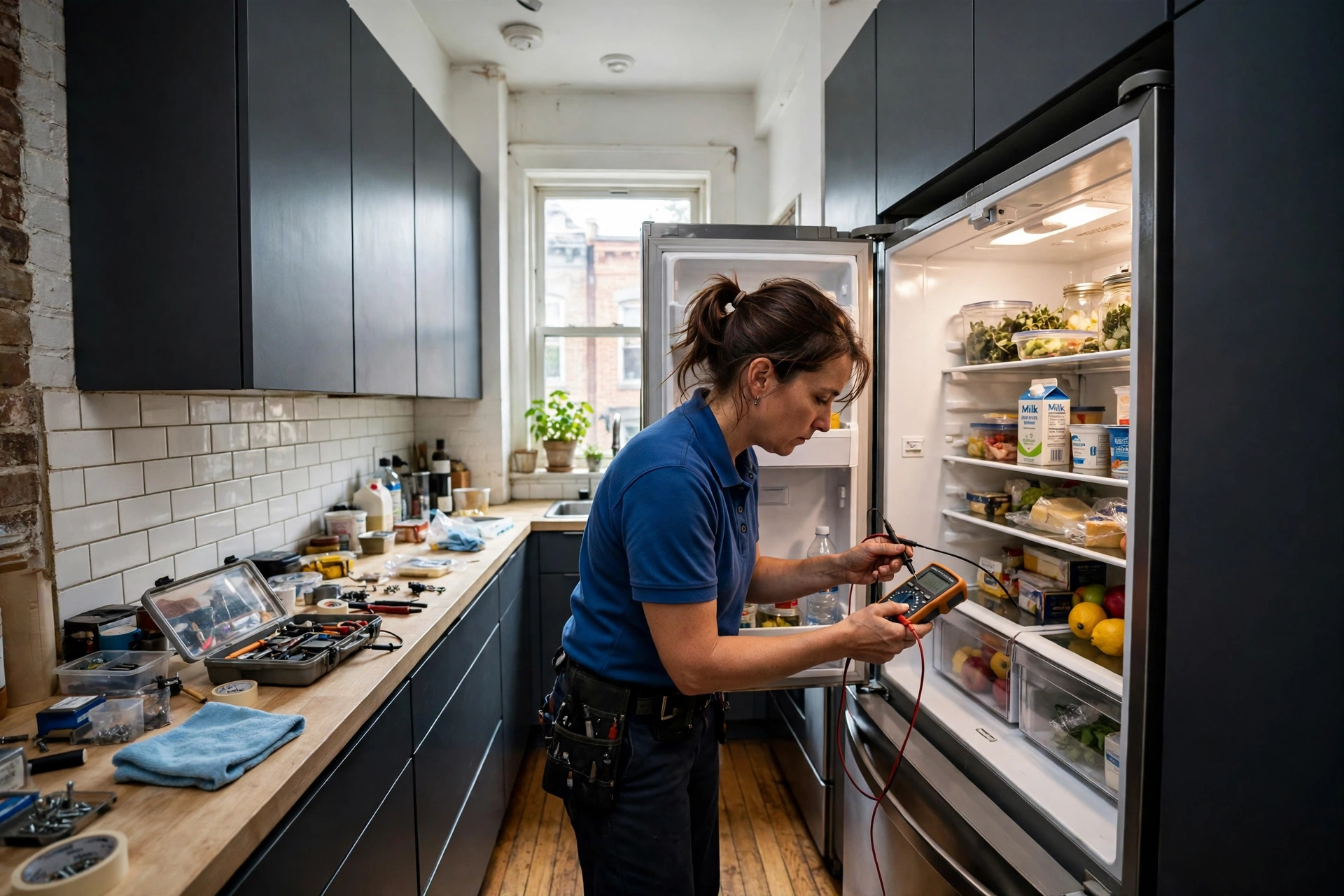
When the fresh food side runs warm, airflow is the first suspect: an evaporator fan that quit, a damper door stuck closed, or condenser coils blanketed in dust and pet hair. The service page carries the full fault list and the cost band for Washington homes.
An oven that runs hot or cold by a steady margin usually needs calibration or a new temperature sensor, both small repairs with a big effect on baking. In Washington, it is quoted in writing after the machine is tested.
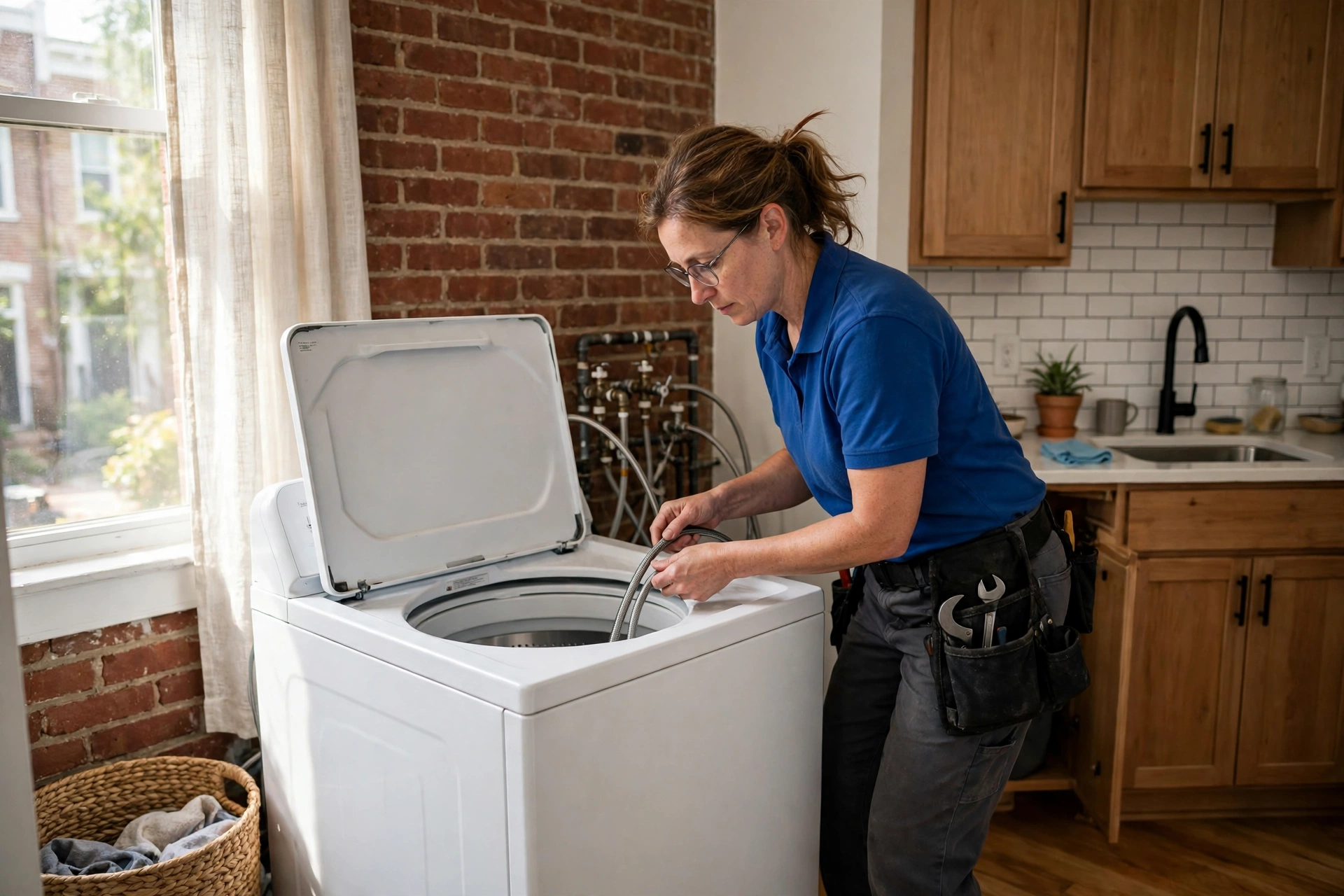
A washer that fills and then sits silent has usually lost its drain pump or has a sock lodged where socks always end up, in the pump trap. It is core work in Washington, quoted from the published band after a real diagnosis, never from the symptom alone.
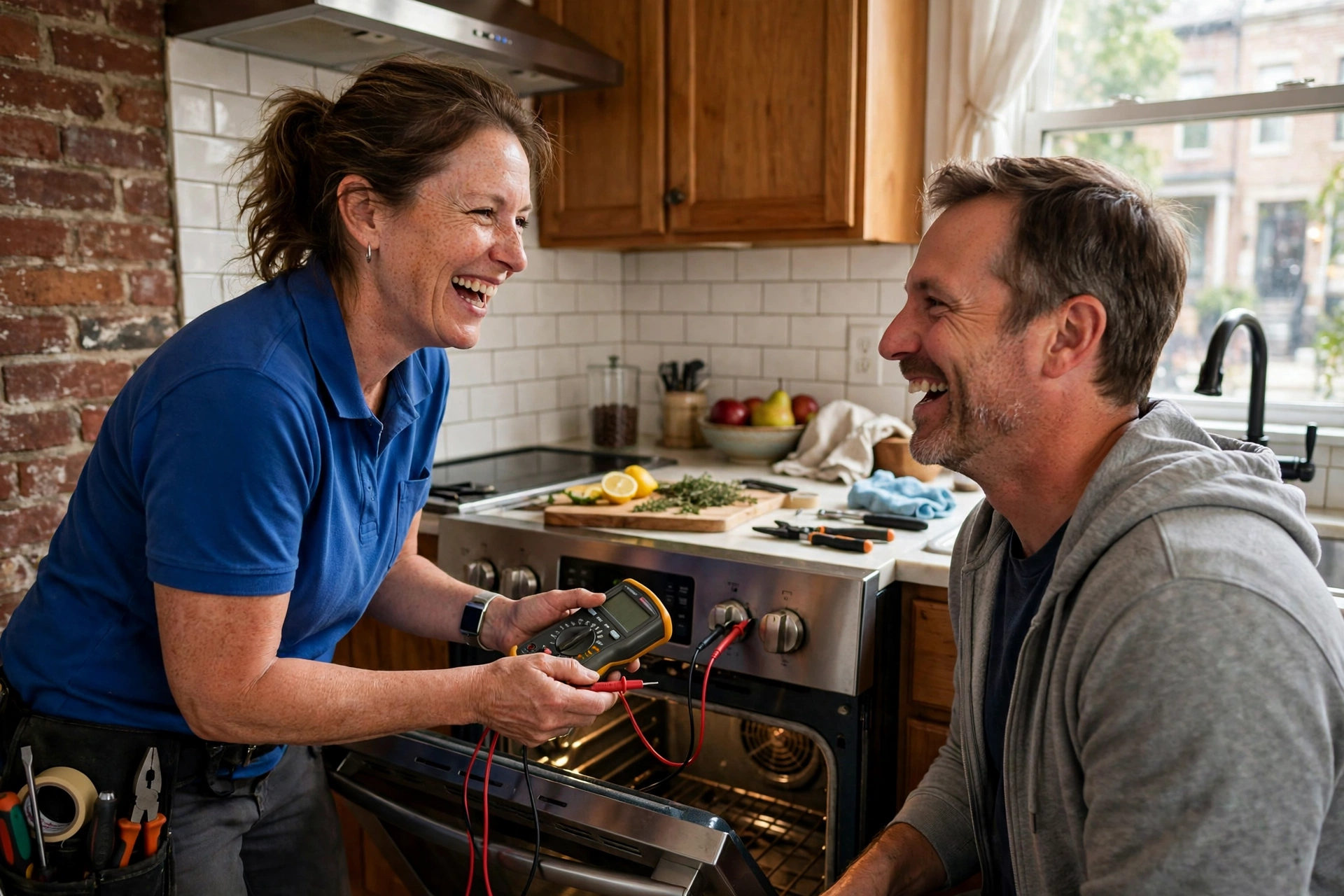
Tumbling with cold air is the classic electric dryer pattern: an open heating element or a tripped thermal fuse, both confirmed with a continuity meter. In Washington, the diagnosis names the part before the price is named.
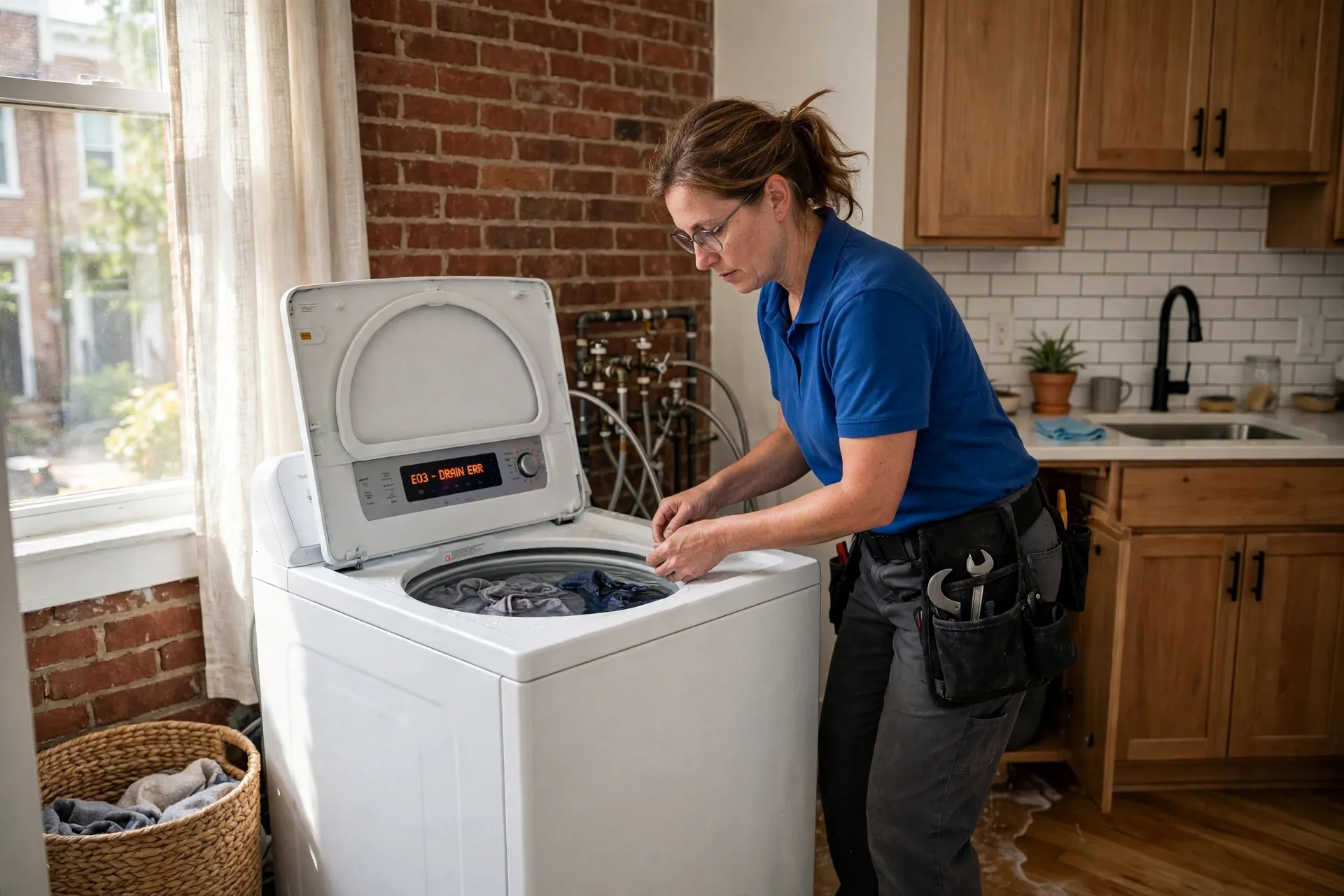
Standing water at the end of a cycle is the most common call, and the drain pump is the first suspect, followed by a clogged filter or a drain hose blocked where it meets the sink plumbing. It is core work in Washington, quoted from the published band after a real diagnosis, never from the symptom alone.
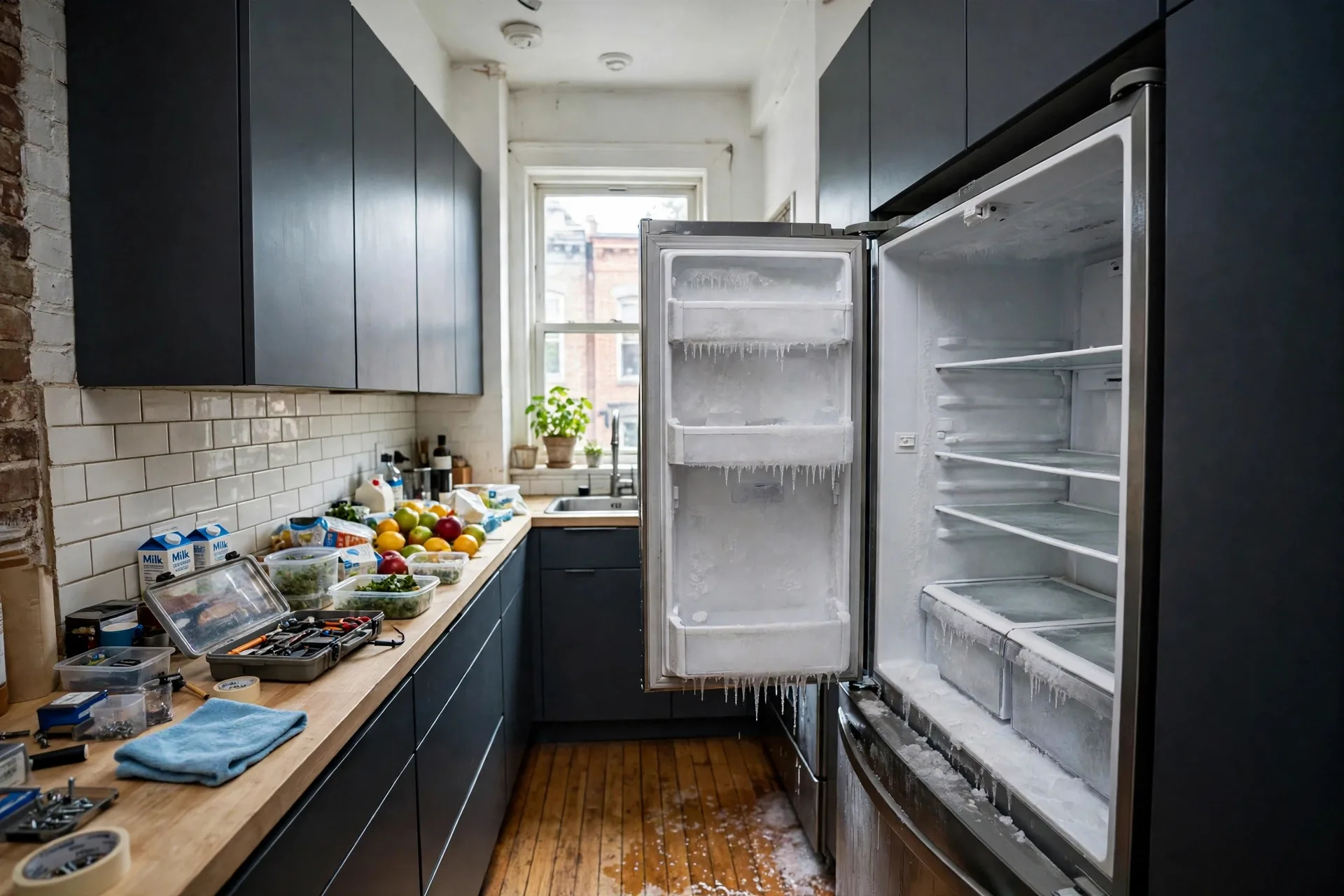
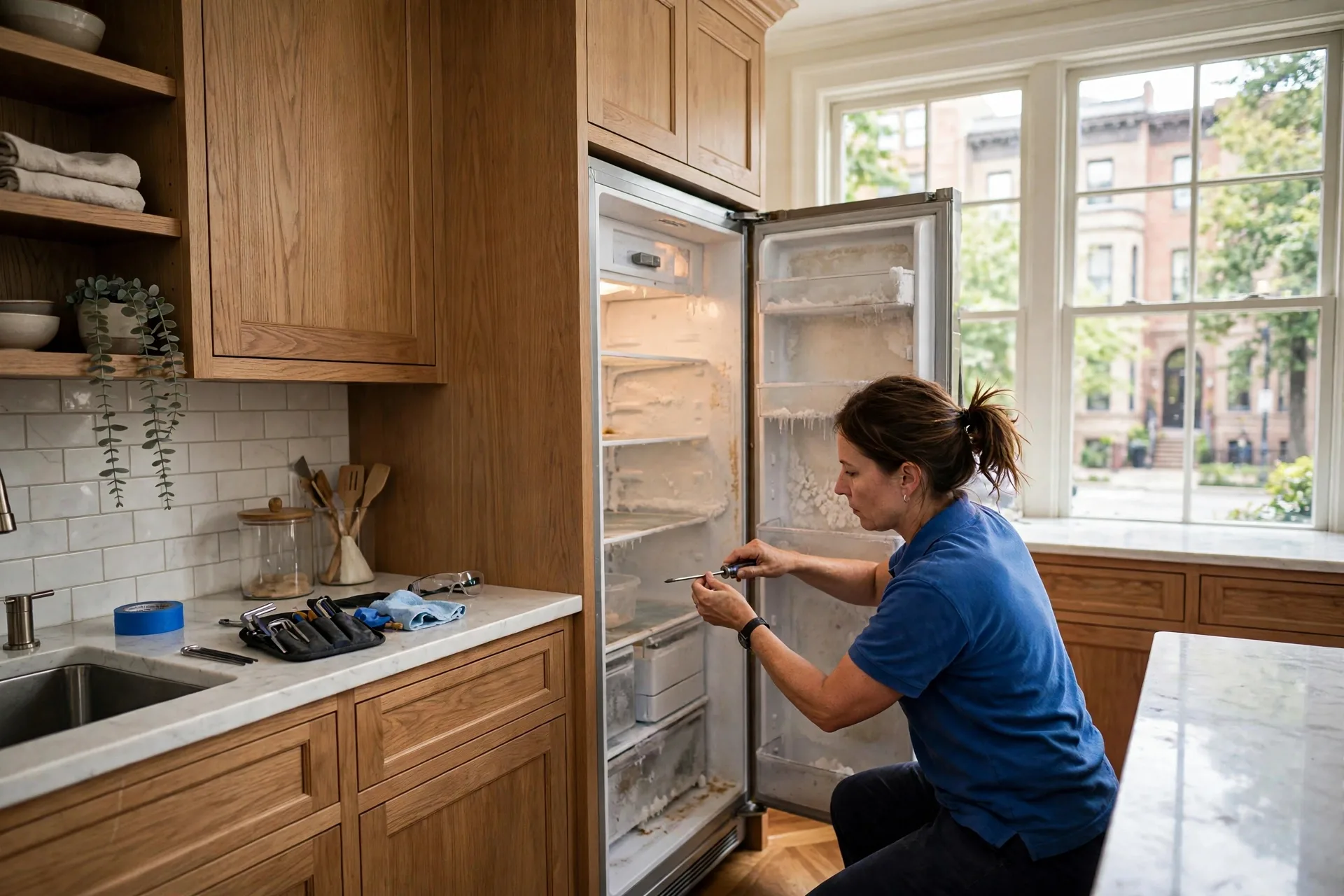
Freezers that run warm by a few degrees are failing the way that costs most: food thaws at the edges and refreezes, and the damage is done before anyone notices. In Washington, that fault is diagnosed before it is quoted.
A gas zone that lights poorly or burns yellow and lazy is telling you about its ports and its air; cleaning and electrode work solve most of it. In Washington, it is diagnosed the way every service here is: tested first, quoted in writing, then repaired.
Working kitchens in Washington cannot wait politely, so commercial refrigeration is scheduled by stakes: product first, then the repair, documented for whoever approves the invoice.
Multi household laundry in Washington is serviced with unit level records: what failed, what was fitted, and what is likely next, the paperwork property managers actually need.
Light commercial cooking in Washington, the ranges and ovens of its cafes, church kitchens, and small restaurants, is serviced in its honest category: tested with thermometers, quoted in writing, and returned to service with readings recorded.
Managers booking from Washington get the file ready version of appliance repair: a written verdict, a single figure, and a record that survives the group chat and the budget meeting alike.
Recent work in Washington neighborhoods, each card with the repair, the place, and the final cost.
In Georgetown, a dishwasher that had stopped draining traced to a tired pump and a hose sagging at the sink. Both were corrected, and the machine drained clean through two cycles.
A dryer in Adams Morgan ran hot and slow. The element tested weak and the first vent bend was packed; with both addressed, a timed load dried in a single cycle.
The Petworth call was a range that lit slowly and heated slower. A weak igniter was the cause, replaced and timed across a full preheat.
A garage freezer in Logan Circle was losing ground in the heat. Dirty coils and a tired gasket shared the blame; cleaned and renewed, it held zero through a hot afternoon.
In Georgetown, a glass top zone quit mid cooking. The element tested open; a new one was fitted and the surface reseated properly.
The Adams Morgan washer stopped with water standing. A jammed pump, cleared and tested, and the machine finished the load it had abandoned.


A call from Capitol Hill: Garage refrigerator losing ground through a heat wave. Testing found the condenser coils were matted with dust and the door gasket had split at the corner. We cleaned the coil pack, replaced the gasket, and rechecked temperatures the same afternoon. Basement and in-law units across the District get kitchen grade diagnosis, not a lesser verdict.


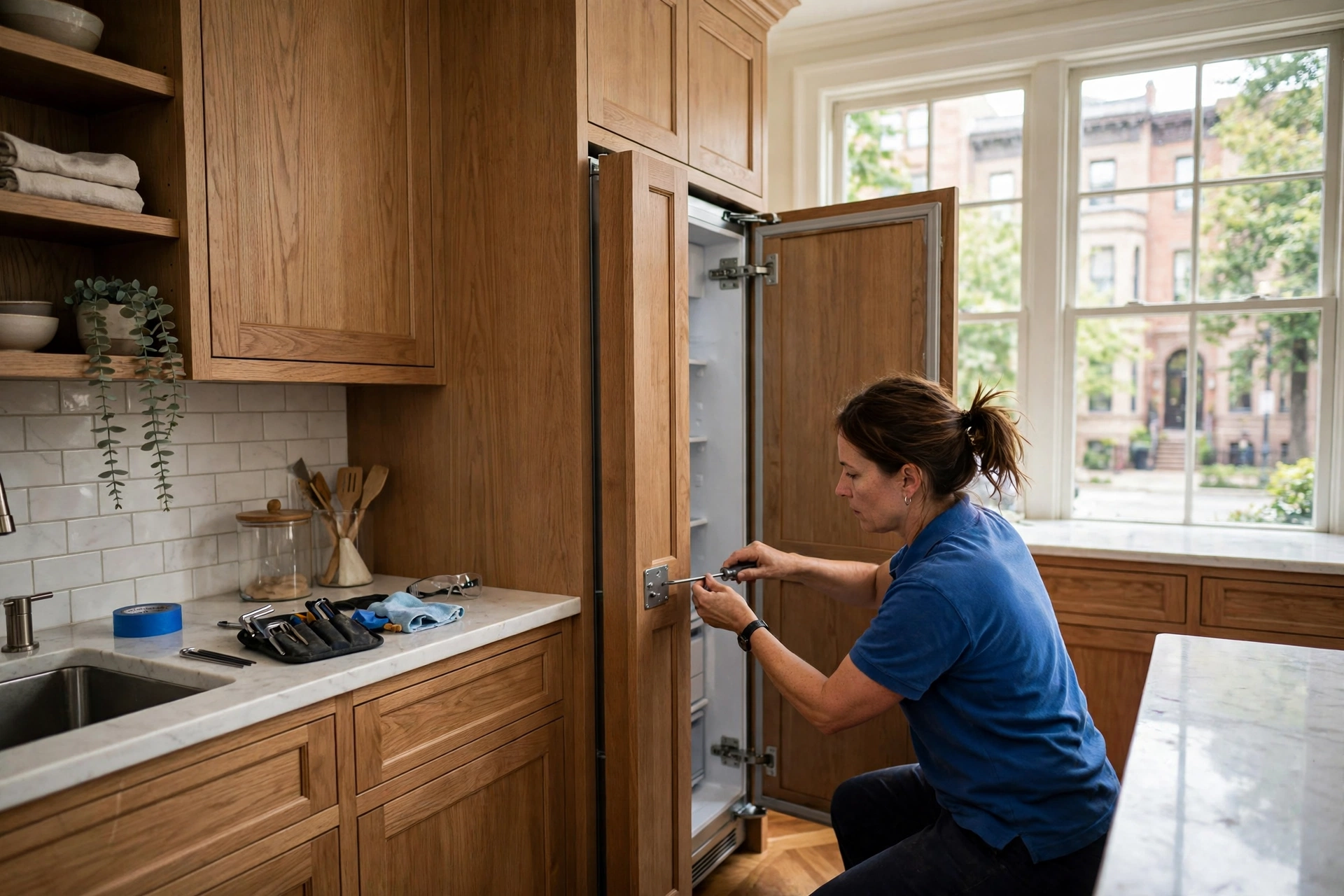
A call from Georgetown: Built in showing temperature swings on the display. Testing found a drifting cabinet sensor reporting false readings to a healthy control. We replaced the sensor and verified display against an independent thermometer across a day of cycles. Georgetown and Dupont Circle kitchens are repaired in place by owners who value the machines they have.


A call from Dupont Circle: Washer refusing to fill on a well water supply. Testing found inlet screens packed with sediment and a weak inlet valve. We fitted a new valve, flushed the screens, and verified fill rates on both temperatures. A repair in the District is proven under load before it is called finished, rowhouses and high rises alike.
Every job follows the same order: listen to the symptom, test the machine, name the fault with evidence, quote one figure in writing, then repair and prove the repair under load. A quote written before the test is a guess with a dollar sign, and a repair without a proof cycle is a promise instead of a result. In the District, the sequence is the service: tested first, quoted in writing, proven under load.
Parts are matched to the machine by model and specification, and wear parts like hoses, lines, and seals are renewed rather than reused when a job opens them up. Where a component has a known better revision, that is what gets fitted, and the old part is available for you to see. The method does not change between a Capitol Hill rowhouse and a Tenleytown colonial.
Most common repairs finish in a single visit once the part is in hand. Diagnosis comes first at the published visit range, credited toward the repair when you proceed; the figure you approve is the figure for the work described, and a second fault revealed mid repair is reported before it costs anything. No pressure, no mystery pricing, no parts on suspicion: that is the bargain citywide.
Costs are the part of appliance repair most often hidden, so this site publishes them. The categories below follow the national guides, refrigeration averaging near $255, cooking near $214, laundry near $184, with a diagnostic visit at $75 to $125 credited toward the repair. The proof, anywhere in Washington, is a machine doing its real work before we leave.
Published guides put the average appliance repair at about $179 per job, with a typical range of $108 to $251. Faults near the lower end usually involve one accessible part, a switch, a fuse, a belt. Work near the upper end tends to involve cooling systems, control boards, or machines that take longer to open and test. Two refrigerators with the same symptom can need very different parts, which is why the figure follows the diagnosis. That standard holds in every ward, from the Palisades to Anacostia.
By category, the guides put refrigeration near $255 on average, cooking near $214, and laundry near $184. The spread tracks the systems involved: sealed refrigeration at one end, belts and pumps at the other, with cooking's igniters and elements in between. Your appliance's band is published on its service page. That standard holds in every ward, from the Palisades to Anacostia.
A diagnostic visit commonly runs $75 to $125 in the published figures, usually credited toward the repair when work goes ahead. The visit finds the real answer, since one symptom like a warm refrigerator can trace to half a dozen parts. Proper testing first protects you from paying for the wrong repair, and if a machine is not worth repairing, you still leave with a clear finding and its reason. The method does not change between a Capitol Hill rowhouse and a Tenleytown colonial.
The part moves the price first: a pump and a control board live in different worlds, and a compressor sits beyond both. Access comes next, since a freestanding range opens in minutes while a built in oven is persuaded out of cabinetry. Age matters quietly, because older machines sometimes need a part located rather than simply ordered, and platform matters most of all on the luxury built ins. The proof, anywhere in Washington, is a machine doing its real work before we leave.
The base is Washington, and the working ground extends across the communities below: same crew, same standards, same published pricing. The areas: Capitol Hill, Georgetown, Dupont Circle, Adams Morgan, Columbia Heights, Petworth, Shaw, Logan Circle, Foggy Bottom, Chevy Chase.
Also covered: Tenleytown, Cleveland Park, Woodley Park, Glover Park, Brookland, Anacostia, Congress Heights, Forest Hills, Palisades, Spring Valley. Each community has its own page with services, costs, and a recent project.
Tell us the appliance and the symptom on the form and we will answer with the published range and the next step.
Start with the guides: $179 average, $108 to $251 typical range, and category averages of about $255 for refrigeration, $214 for cooking, and $184 for laundry. Then let the diagnosis price your actual fault, in writing, before any work. DC households plan around real figures, and this page exists so they can.
The wear part repairs: fans, pumps, igniters, elements, switches, hoses, and seals, on machines whose cabinets and main systems are sound. The visits that end in replace are the structural and end of life failures, and we document those verdicts the same way. No pressure, no mystery pricing, no parts on suspicion: that is the bargain citywide.
We service the major brands sold in this region across kitchen and laundry, and most of the faults on this page are shared across brands because the underlying systems are shared. Tell us the brand and model on the form and we will confirm before the visit. In the District, the sequence is the service: tested first, quoted in writing, proven under load.
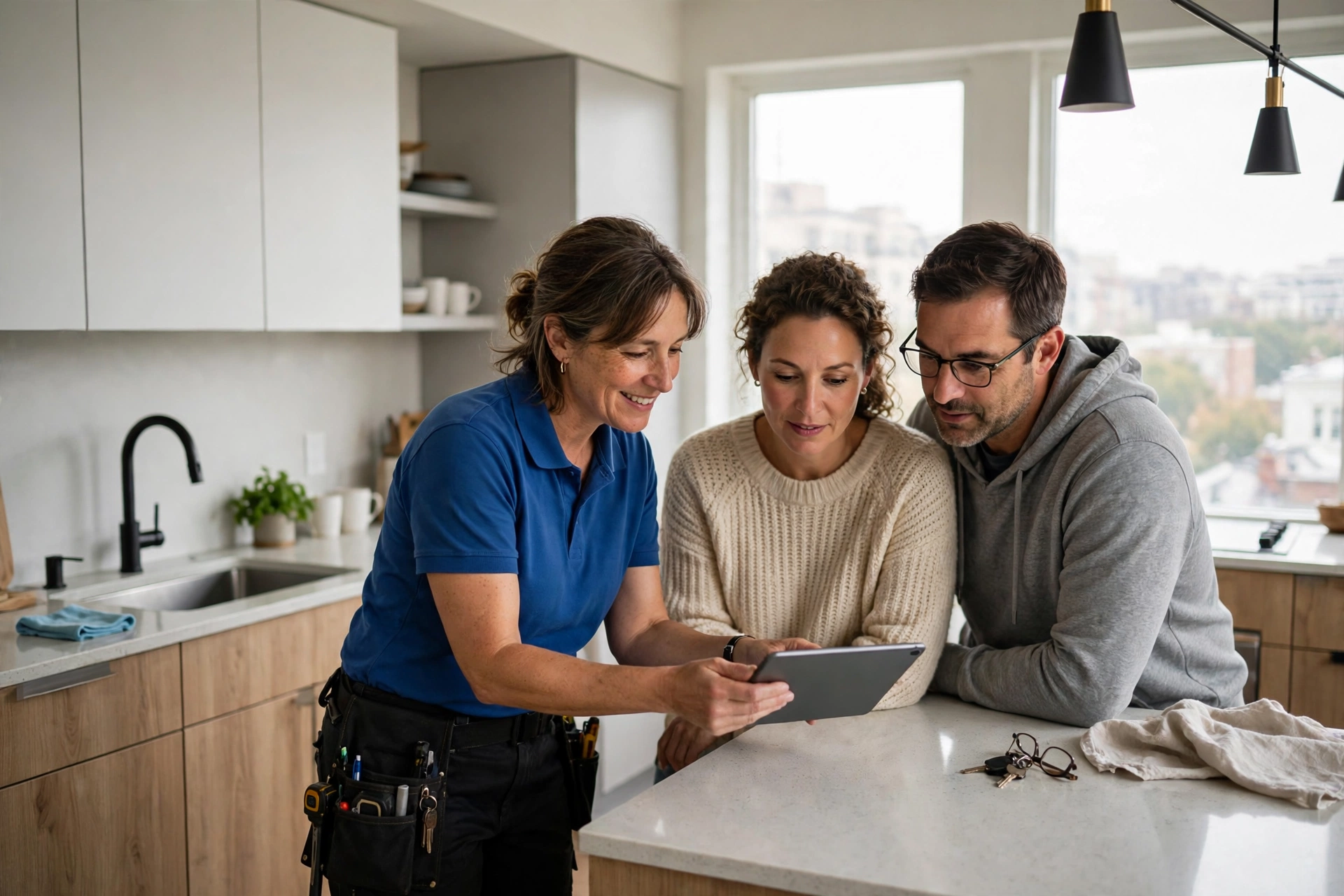
The technician runs the appliance, reads any stored error codes, and tests the suspect systems with meters and thermometers. You receive the fault in plain language, one written figure for the repair, and an honest note on urgency. The visit is priced from the published guides and credited toward the repair when you proceed. The method does not change between a Capitol Hill rowhouse and a Tenleytown colonial.
Tell us your name, phone, email, service address, whether the job is a repair or an installation, and what the appliance is doing. We read every request and respond with the published range and the next step, a diagnostic visit that turns the range into one written figure. That standard holds in every ward, from the Palisades to Anacostia.
Often, yes: older machines were built with serviceable parts, and a wear part repair on a sound cabinet buys years at a fraction of replacement. The diagnostic visit weighs condition and parts availability and gives you the arithmetic in writing. The proof, anywhere in Washington, is a machine doing its real work before we leave.
One form covers repairs and installations alike. Name the appliance, tell us what is happening with it, and we will reply with the price band for the job and the next step: a diagnostic visit, a written figure, and work that starts only on your approval.
Prefer to talk it through first? Send the form and we will call you back at the number you give us.