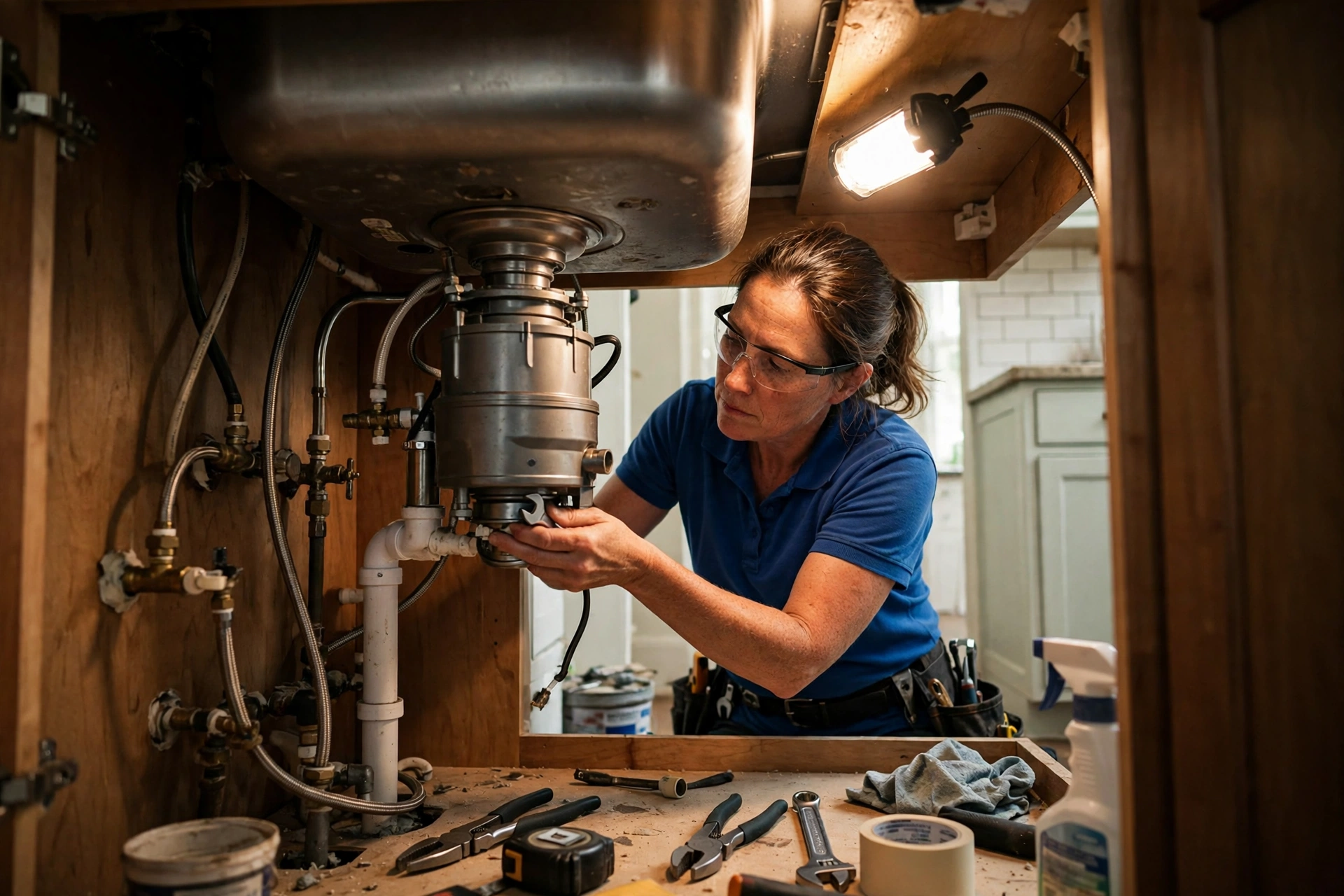
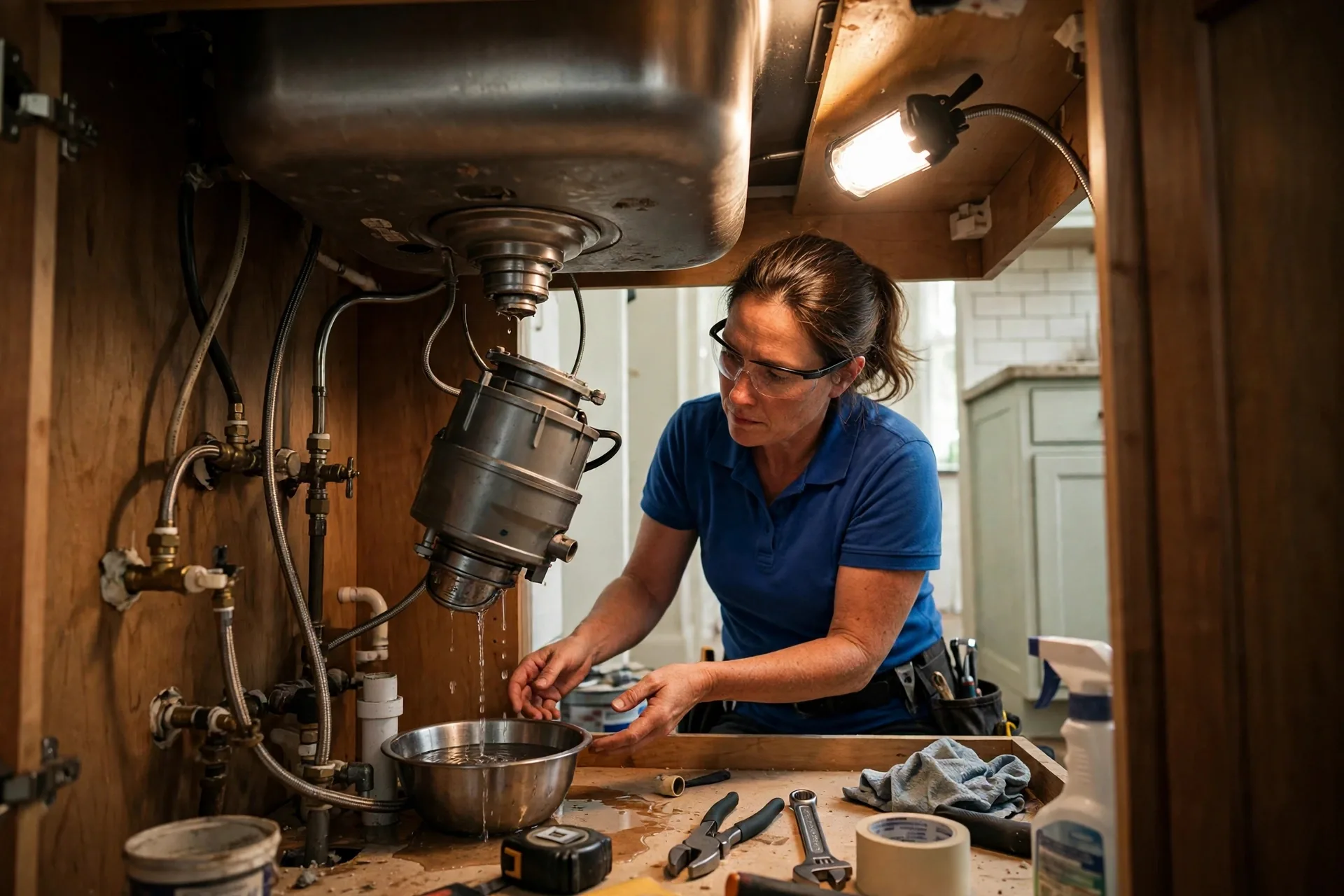
Washington DC Appliance Repair Co provides Garbage Disposal Repair in Washington, District of Columbia: published price ranges up front, the fault confirmed by diagnosis before we quote, and one written figure before work begins.
Garbage Disposal Repair in Washington, DC by Washington DC Appliance Repair Co
Washington DC Appliance Repair Co is the crew Washington calls for garbage disposal repair: a diagnosis built on readings, one written figure, and work that does not begin until you have seen both.
Disposals fail audibly: the hum, the silence, the leak, and the grind that sounds like gravel. We repair batch feed and continuous feed units, test the motor and the chamber honestly, and price repair against replacement with no thumb on the scale. In Washington, the garbage disposal calls follow the housing: Washington's housing runs from Capitol Hill rowhouses and Georgetown townhouses to condo towers in Shaw and Logan Circle and single family streets in Chevy Chase and Brookland, and every housing type keeps its own appliance profile.
Jams, hums, and resets
The reset button trips on overload and heat; a disposal that trips repeatedly is reporting a motor working too hard or a chamber grinding against wear. Dead silence is electrical until tested: switch, connection, or a motor winding finally open, separated by meter in minutes. Hum without motion is the disposal's most hopeful symptom. The flywheel is pinned by something it cannot chew, and freeing it is a power off, hands out procedure with the wrench made for the job. A repair in the District is proven under load before it is called finished, rowhouses and high rises alike.
Leaks and chamber wear
Grinding plates wear smooth with years, and a disposal that runs forever to clear food is worn rather than broken, another honest replacement case. Where a disposal leaks decides everything. Two of the three leak locations are seals and connections; the third, through the bottom of the grind chamber, is end of life and we say so plainly. The rubber baffle is the disposal's unsung part. When it hardens, the unit gets louder and messier, and the fix is minutes. Anacostia and Congress Heights households get the identical diagnostic standard as any address in the city; the map changes nothing.
How We Diagnose Garbage Disposal Repair in Washington
Disposal diagnosis is hands off and power off first: flywheel freedom, chamber inspection by light, then electrical tests, then a wet run under observation for leaks. Georgetown and Dupont Circle kitchens are repaired in place by owners who value the machines they have.
Recent Project: Garbage Disposal Repair in Petworth
BEFOREAFTER
A call from Petworth: Disposal leaking onto the cabinet floor. Testing found the sink flange seal failed, chamber itself sound. We reseated the flange with a fresh seal, reconnected and leak tested every joint under a full sink of water. The District's housing runs from Capitol Hill rowhouses to Cleveland Park colonials, and every diagnosis starts with the building in front of us.
Turnaround
Finished in one visit.
Final Price
$155
Garbage Disposal Repair Cost in Washington, DC
Expect $120 to $280 here. A jam cleared and a seal renewed are small figures; when replacement wins, the labor to swap the unit sits at the top of the band and the unit itself is priced at quote. The quote you approve is the figure you pay for the diagnosed repair, written before work begins, with the diagnostic visit credited toward it when you go ahead. District water hardness writes scale into elements and inlet valves on a schedule we know by heart.
Why Washington Calls Washington DC Appliance Repair Co for Garbage Disposal Repair
Disposals attract two bad outcomes: replaced when jammed, and repaired when corroded through. Our job is the ten minutes of testing that keeps you out of both. If the repair stops making sense at any point in the diagnosis, you hear it at that point, with the numbers. That rule has cost us jobs and earned us the neighborhood, and it is not changing. Petworth, Shaw, and Columbia Heights rentals route turnover work through written findings as standard practice.
Request an Appliance Repair Quote in Washington, DC
Use the quote form to describe the symptom as you experience it. The plainer the description, the faster the diagnosis starts when we arrive.
Frequently Asked Questions
My disposal hums but does not grind. Is it dead?
Almost never. A hum means the motor is alive and the flywheel is jammed, usually by something small and hard. Power off, the jam is freed from below with the hex wrench, and most units return to service in minutes. A repair in the District is proven under load before it is called finished, rowhouses and high rises alike.
Why does my disposal keep tripping its reset?
The reset is a messenger. Something is making the motor work too hard, and repeated resets without a diagnosis shorten the motor's life each time. Condo and co-op rules in buildings from Foggy Bottom to Chevy Chase shape visit planning, and the form is where that planning starts.
Water leaks from the bottom of my disposal. Can that be fixed?
A leak through the bottom of the chamber itself means the housing has corroded through, and that is a replacement case, full stop. Leaks at the top flange or the side connections are seals, and those we repair. Summer storm flickers age control boards across whole wards at once here.
What does the diagnostic visit cost?
Disposal visits are among the smallest tickets in the trade. You approve one figure that covers finding the fault and the common fixes in the same visit. The visit record stays with the household, readings and part numbers included, wherever in DC the home sits.
How long should a disposal last?
Plan on roughly a decade. Age reframes every disposal fault, and we weigh it openly when repair and replacement are close. Basement and in-law units across the District get kitchen grade diagnosis, not a lesser verdict.
Is a bigger disposal worth it?
Horsepower buys torque, quiet, and patience with fibrous food. Whether your kitchen needs it depends on how you cook, and we will say which side of the line you are on. Georgetown and Dupont Circle kitchens are repaired in place by owners who value the machines they have.
Get Your Appliance Repair Quote
One form covers repairs and installations alike. Name the appliance, tell us what is happening with it, and we will reply with the price band for the job and the next step: a diagnostic visit, a written figure, and work that starts only on your approval.
Prefer to talk it through first? Send the form and we will call you back at the number you give us.