Washington DC Appliance Repair Co is the Washington crew for freezer and ice maker repair: testing comes before pricing, the figure is put in writing, and the repair follows only after you approve it.
Freezer and Ice Maker Repair in Washington, DC by Washington DC Appliance Repair Co
Washington DC Appliance Repair Co is the crew Washington calls for freezer and ice maker repair: a diagnosis built on readings, one written figure, and work that does not begin until you have seen both.
A freezer's job sounds simple and its faults are not: temperature drift ruins food slowly and quietly. We repair upright and chest freezers plus ice makers of every configuration, and we verify repairs with thermometer readings over real time. The freezer is a machine with a memory: every ignored symptom is written down in wear. In Washington, our visits read that history before naming the fault.
Temperature and frost faults
Freezers that run warm by a few degrees are failing the way that costs most: food thaws at the edges and refreezes, and the damage is done before anyone notices. Chest freezers die differently, usually controls and compressors after long quiet lives, and their simplicity makes most repairs worthwhile. Frost patterns diagnose freezers the way frost patterns diagnose refrigerators: wall frost means defrost failure, door frost means a sealing problem, and even frost with warm temperatures means capacity trouble. Georgetown and Dupont Circle kitchens are repaired in place by owners who value the machines they have.
Ice maker faults, the full family
No ice at all is sorted at the water supply first: valve, line, and filter, before the maker itself is suspected. Cubes tell the truth about temperature and flow: small, hollow, or cloudy cubes are data, and we read them before recommending parts. Flooding bins point at the inlet valve weeping past its seal or a level control that lost its reference, and both are standard repairs. A repair in the District is proven under load before it is called finished, rowhouses and high rises alike.
How We Diagnose Freezer and Ice Maker Repair in Washington
Freezer diagnosis is temperature over time: we log cabinet readings, check the frost pattern, and cycle the ice maker through a manual harvest to watch it work. Summer storm flickers age control boards across whole wards at once here.
Recent Project: Freezer and Ice Maker Repair in Capitol Hill
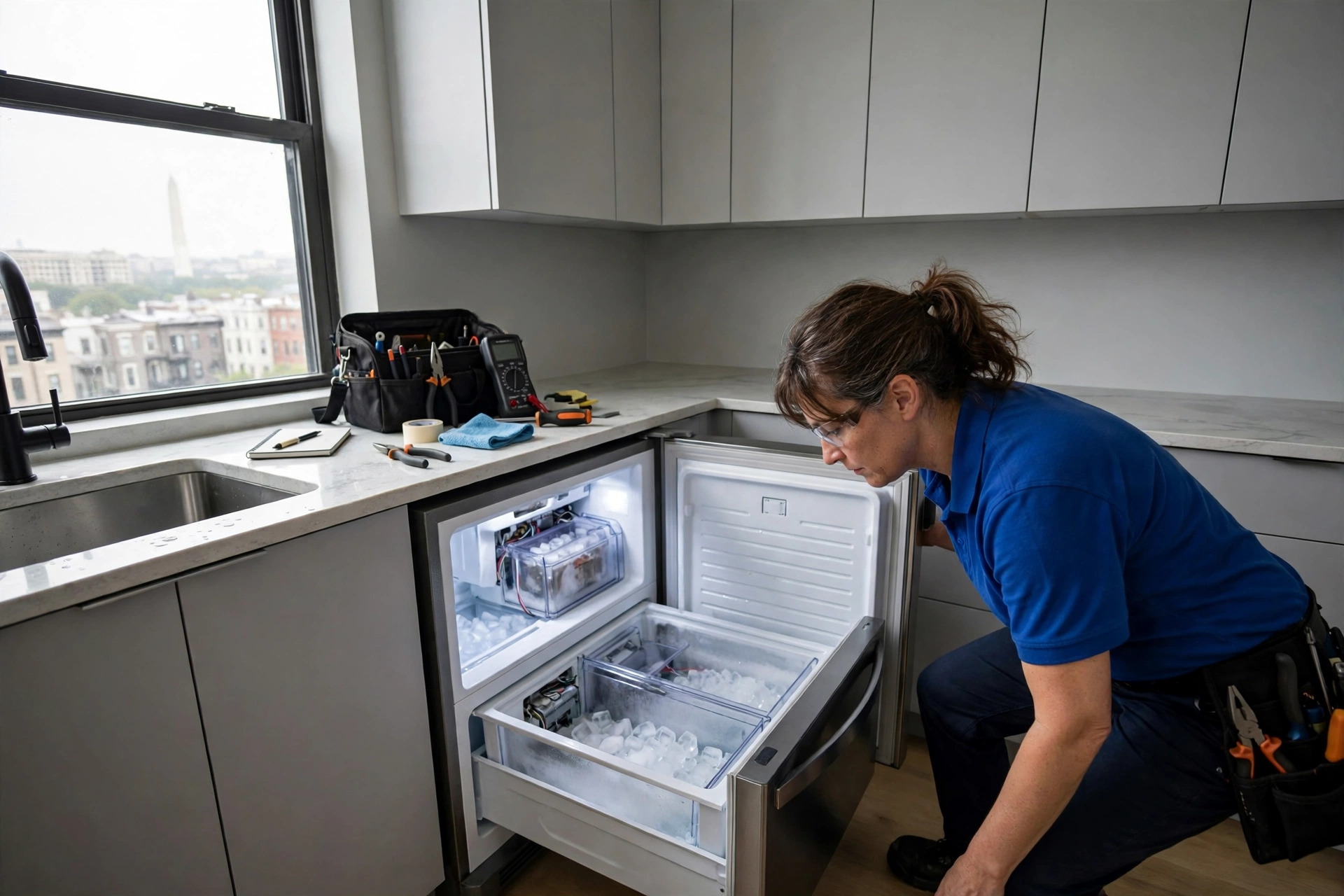
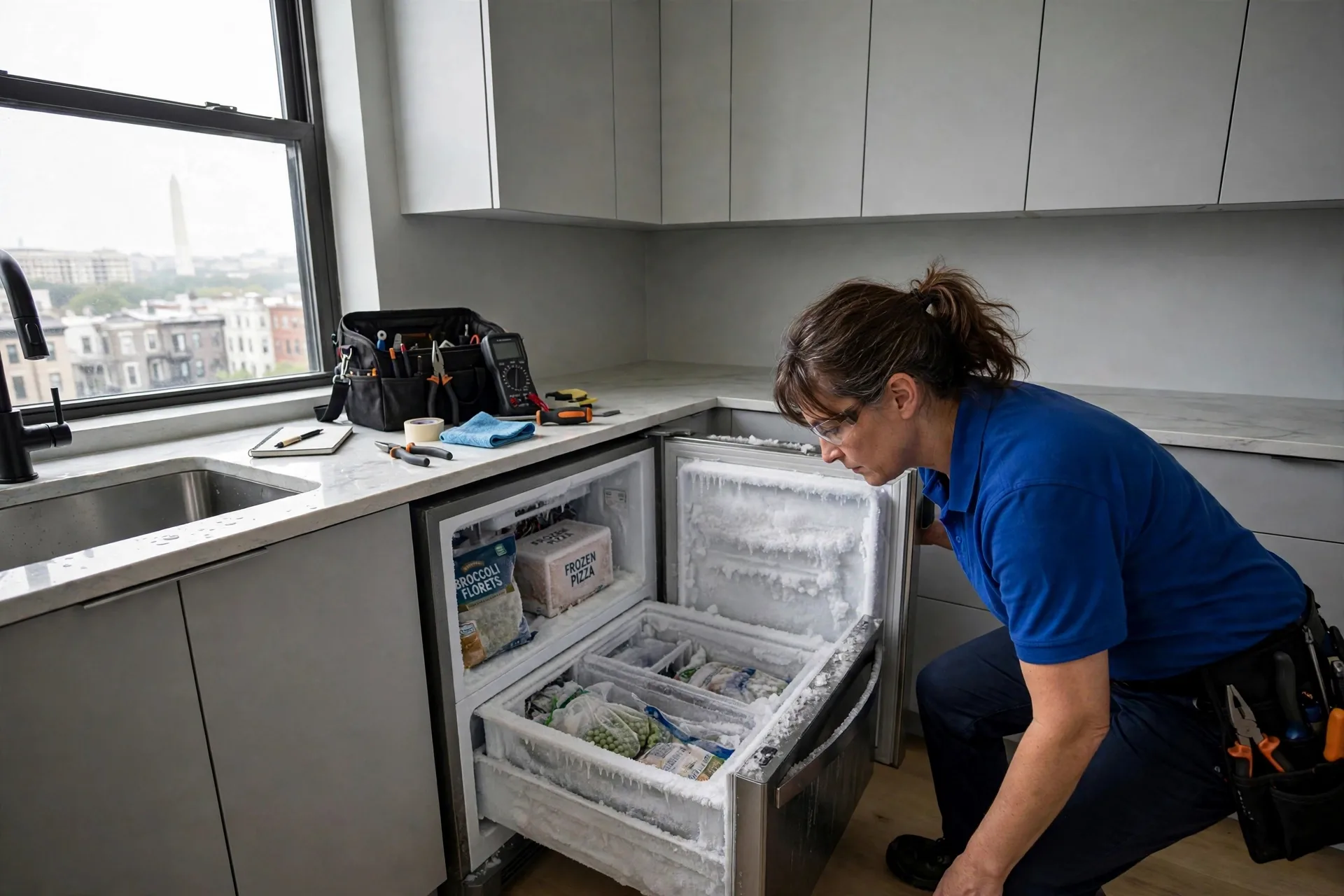
BEFOREAFTER
A call from Capitol Hill: Upright freezer drifting to twenty degrees. Testing found the evaporator fan intermittent and the coil frosted from a failed defrost termination. We replaced the fan and termination sensor, defrosted the coil, and logged temperatures back to zero. Basement and in-law units across the District get kitchen grade diagnosis, not a lesser verdict.
Turnaround
Finished in one visit.
Final Price
$190
Freezer and Ice Maker Repair Cost in Washington, DC
What moves the figure is whether the fault lives in the cold system or in the accessories: a maker or a valve is an hour, while compressor work is a different class of job. One figure is quoted in writing after diagnosis, and the diagnostic fee folds into the repair when you proceed, which is the arrangement the published guides describe. District water hardness writes scale into elements and inlet valves on a schedule we know by heart.
Why Washington Calls Washington DC Appliance Repair Co for Freezer and Ice Maker Repair
Our approach is measurements before money: cabinet temperature, frost pattern, and a harvest cycle observed, so the quote rests on evidence. Every job on this page ends with the appliance run through its work in front of us. A repair that has not performed is a theory, and we do not leave theories running in your kitchen. District water hardness writes scale into elements and inlet valves on a schedule we know by heart.
Request an Appliance Repair Quote in Washington, DC
Use the quote form to describe the symptom as you experience it. The plainer the description, the faster the diagnosis starts when we arrive.
Frequently Asked Questions
Why did my ice maker suddenly stop making ice?
Sudden stops are usually supply or temperature: the fill line froze, the valve quit, or the freezer crept above the temperature the maker needs to harvest. A repair in the District is proven under load before it is called finished, rowhouses and high rises alike.
How cold should my freezer be?
Zero degrees Fahrenheit is the target for food safety and ice production. Ice makers need the freezer at about 10 degrees or below to cycle reliably, so a freezer at 15 can keep food hard and still make no ice. Petworth, Shaw, and Columbia Heights rentals route turnover work through written findings as standard practice.
Is it worth repairing a chest freezer?
Usually. Chest freezers have few parts and long lives; a control or a fan repair is inexpensive against replacement, and even compressor decisions are clearer on a simple machine. The District's housing runs from Capitol Hill rowhouses to Cleveland Park colonials, and every diagnosis starts with the building in front of us.
What does the diagnostic visit cost?
The visit runs $75 to $125 in the published guides, credited toward the repair in the usual arrangement, thermometer readings included. Summer storm flickers age control boards across whole wards at once here.
Why are my ice cubes small or hollow?
Small cubes mean the mold is underfilled or frozen too slowly: flow restriction at the valve or filter, or a freezer running warm. Both are measured on the visit. Basement and in-law units across the District get kitchen grade diagnosis, not a lesser verdict.
Can an ice maker be replaced on its own?
Yes. The maker is a modular unit on most refrigerators, and replacement is one of the cleanest repairs in the kitchen when the fault is inside the maker itself. The visit record stays with the household, readings and part numbers included, wherever in DC the home sits.
Get Your Appliance Repair Quote
One form covers repairs and installations alike. Name the appliance, tell us what is happening with it, and we will reply with the price band for the job and the next step: a diagnostic visit, a written figure, and work that starts only on your approval.
Prefer to talk it through first? Send the form and we will call you back at the number you give us.